

A version of this conversation happens more often than you'd think.
A founder, while the exit was in process (the last contracts were being written up), tells me he already knows what he's going to do next. He says it the way he used to say he knew the market. He’ll join a nonprofit board, buy a smaller company, and teach. He has the plan. He has the spreadsheet. What he doesn't have is any interest in it, and when I pressed him on his matter-of-fact lack of enthusiasm, he gets defensive and argues why the plan is correct anyway.
There was no confusion, and that was the problem. Confused people ask questions. He's absolutely certain, and certainty has closed the door on the part of him that might have had something planned that’s more aligned with who he really is.
The Prison of Expertise
We tend to treat certainty as the reward for a life well handled. Many years of education, experience, and high-stakes decision-making earns the right to know. And there's something to that. Nobody wants a surgeon who's still weighing the options with the incision already made.
But watch what happens over a career. A person gets really good at something. Being good at it gets rewarded. The rewards confirm the judgment, the judgment hardens into identity, and one day the thing that made him successful has become the only lens he owns. He can see a business problem from nine angles in ten seconds. But what he can’t see is his own life from one new angle in ten years.
Successful people are especially prone to this, and for a fair reason. Their certainty has a track record. It worked. The trouble is that it worked on a particular kind of problem, in a particular season, and neither the problem nor the season remains the same forever.
Think back to the moments you were most sure about something. That younger you had no doubts about. The deal that couldn't miss. The move you knew would fix everything. In my experience, those are often the moments right before life shows up and bites you in the ass, and it's rarely because you were unlucky. It's because certainty stops your planning for contingencies and evaluating other options. You'd already decided what the information meant before the information arrived.

Superman and Clark Kent
I've always found the Superman story more interesting as a psychological picture than as a comic.
Superman is certain. He knows what's right, he knows he can handle it, and he flies in and handles it. Every problem is a problem of force. There's no question he can't answer by being stronger, faster, or more sure. He's also, if you're honest, a little dull (until the writers realized he needed a bit of weakness and they invented Kryptonite!). Nothing surprises him. Nothing can.
Clark Kent is curious. He's a reporter. He asks questions for a living, he follows leads, he's willing to look like he doesn't know. He notices things because he isn't busy being right. The joke of the story is that Clark is the disguise, but I'm not so sure. Clark is the one who's still learning. Clark sees that relationships can’t be solved by rescuing someone.
Most of the men I work with spent the first half of their lives being Superman, and they were good at it. The company needed it. The family, sometimes, needed it. But somewhere in the second half the super identity is seen for what it is: just a costume. And the question underneath is whether there's still a Clark in there, or whether he was chained somewhere in the basement so no one would see that part.
Two Kinds of Intelligence
Arthur Brooks draws on a useful distinction from the psychologist Raymond Cattell between fluid and crystallized intelligence. Fluid intelligence is the raw horsepower: speed, working memory, the ability to solve a new problem from scratch. It peaks early, often in the thirties, and declines from there. Crystallized intelligence is the accumulated library: pattern recognition, judgment, the ability to see what a situation is really about. It keeps growing well into later life.
Brooks's point is that people who cling to the first curve while it's falling tend to get miserable. The ones who move to the second curve tend to do fine, and often better than fine. The catch, and this is my observation rather than his, is that crystallized intelligence is dangerous in exactly one way. It can curdle into certainty. A library that no longer takes new books becomes more of a rare books collection than a bank of wisdom to draw on. The point of pattern recognition is to notice when the pattern doesn't fit, and you can only do that if you're still open to seeing it.

The Larger Life
Carl Jung argued that the second half of life asks a different question than the first. The first half is about building the ego: the career, the competence, the persona that gets you through the door. The second half is about something Jung was less explicit about, but it involves loosening the grip on that persona so that other parts of you can be heard.
James Hollis, who writes in Jung's tradition, puts it as a question: are you living the life you were meant to live, or the life you fell into and got good at? He calls the alternative the larger life, and he's clear that the entrance fee is uncertainty. You cannot expand into something you already know the shape of. The larger life, by definition, is the one you can't fully see from where you're standing.
Which means certainty and possibility are in a kind of direct competition. Every question you consider closed is a room you've decided not to enter. Some of those rooms deserve to stay closed. But successful people, in my experience, have closed far more than they realize, and they did it in the name of good judgment.
Back to the Founder
He didn't drop the plan completely. He did something more useful. He got curious about why he'd built it so fast, and whether he was using it to avoid the discomfort of uncertainty. That's not a question Superman can ask. Clark can.
If you want a small experiment, try this. For a week, notice the moments you feel most certain about something that isn't a fact. Not "the meeting is at three," but "this is what I should do," or "I already know how that will go." Don't argue with yourself. Just notice how quickly the door closed, and ask what you might have seen if it had stayed open a little longer.
The founder's plan may have been the right one for him. But he'd never know for sure until he's willing to find out whether he was wrong.
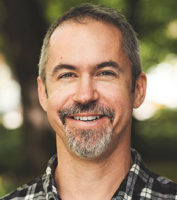
Paul Strobl, MBA, CPC
Owner of Confide Coaching, LLC
Paul Strobl is a Personal Coach for Founders and Executives navigating the space between what they've built and what comes next. Native Texan. Ten years in Argentina. Now based in the Rhodope Mountains of Bulgaria with his wife, adopted son, and a rescued Posavac Hound.
An Anthropology degree sparked a lifelong fascination with why people do what they do. A Thunderbird MBA and twenty years of private coaching later — he works one-on-one, by phone, with a small number of clients worldwide.
If anything here resonated, this is the logical next step.
The Second Half of Life Audit takes less than ten minutes and tends to surface things worth knowing.