
Estimated read time: 9–11 minutes
Not the Man You Think He Is
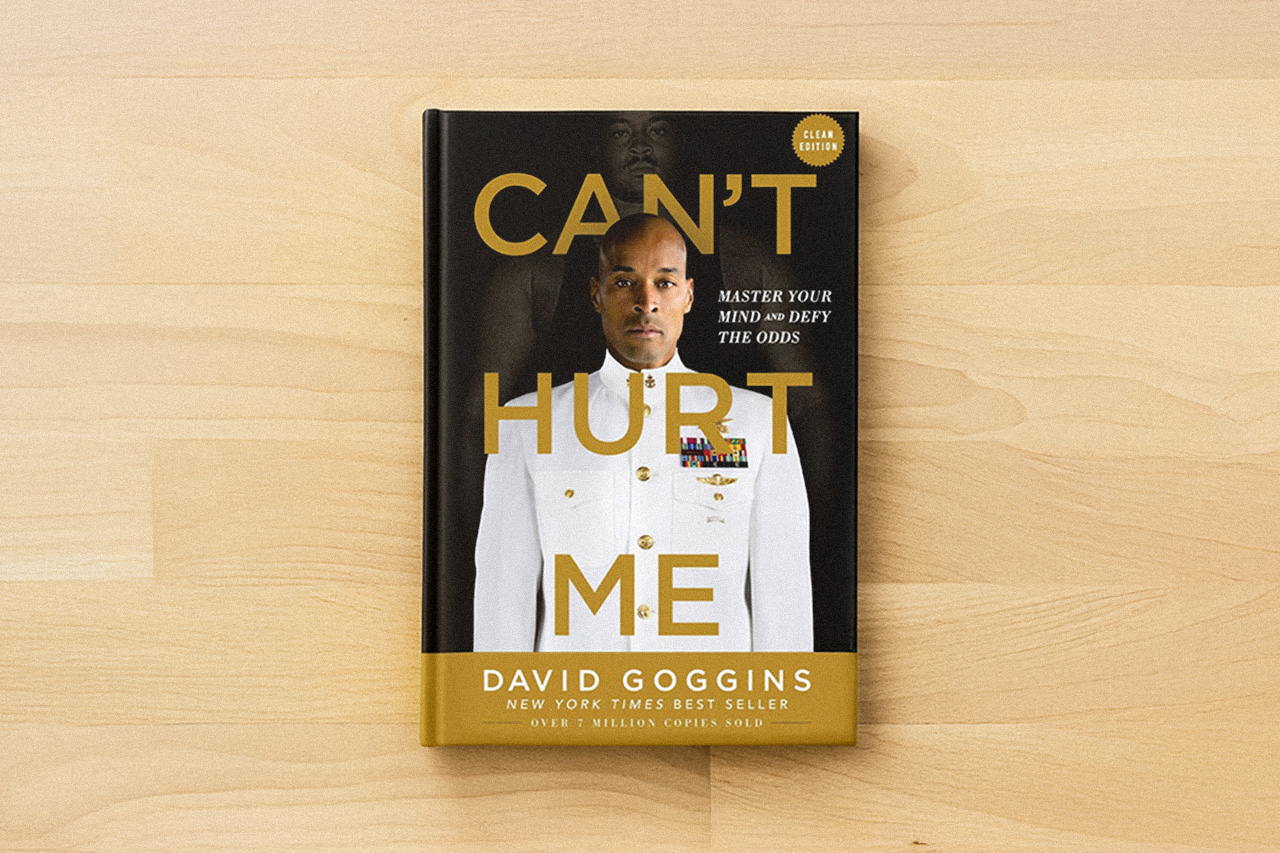
If you’ve only met David Goggins through short clips on Instagram showing the ice baths, ultramarathons, and the “stay hard” mantra, you’re not alone. I expected bravado, too. If you haven’t read Can’t Hurt Me, here’s the surprise: the book is raw, reflective, and unexpectedly meaningful. Through a life-coaching lens, it reads like a practical case study in radical responsibility, identity work, and turning effort into meaning. You don’t have to like Goggins to learn from him (or anyone for that matter), and you definitely don’t have to copy his extremes.
What you can borrow are the parts that work: being radically honest with yourself, training your tolerance for discomfort in small, safe doses, and keeping your wins conscious so your self-trust grows. This isn’t about becoming someone who runs on broken legs; it’s about becoming someone who keeps promises to yourself.
In the paragraphs that follow, I distill six ideas from Goggins into life-coaching practices you can try this week – no military background required. You’ll get simple prompts, a seven-day starter plan, and a way to measure progress that doesn’t lean on willpower alone. Like it or not, Goggins has something to teach us about choosing your edge and doing it with intention.

The Accountability Mirror: Start with Honest Self-Observation
In Can’t Hurt Me, Goggins covers his bathroom mirror with Post-it notes — goals and hard truths he calls the “Accountability Mirror.” His tone is blunt; you don’t have to copy that. What matters is the mechanism: state the facts and pair each with the smallest next step. Honesty isn’t a personality trait; it’s a practice. When you trade “I should do better” for specifics, the fog turns into a map and the next move becomes obvious.
Try it now (5–8 minutes):
1. Write one line. “The truth I’m avoiding is ____. The smallest next action is ____.”
Example: “I go to bed after 23:30 most nights → phone charging in the hallway at 22:00 tonight.”
2. Tag your self-talk. Note three phrases you say to yourself and mark them Helpful / Neutral / Unhelpful
(rule of thumb: schedulable/measurable = Helpful; plain fact = Neutral; global judgment like “always/never/can’t” = Unhelpful).
3. Pick one value and prove it. Choose energy, connection, growth, or focus. Name a brief, observable proof (2–10 minutes) and a likely contradiction that undercuts the same value. Do the proof first; if the contradiction happens, add a two-minute repair so you still finish aligned.
Example — Energy:
| Proof | Contradiction | Repair |
| phone on charger at 22:00; lights out 22:30 | scrolling past 23:00 | phone in another room + one minute box breathing |
Example — Connection:
| Proof | Contradiction | Repair |
| one appreciative text or a phone-free dinner | doomscrolling at the table | put phone away and ask one real question |
Why it matters: You can’t change what you don’t name. Honest naming turns a blurry feeling into a handle you can move.
Watch out for: If the language reads like an attack, rewrite it as a neutral fact and attach a next step — “I scrolled at 23:15 → phone on charger at 22:00.”
Self-talk cue: Specific, not harsh. Imagine speaking to a judge in a courtroom. Facts without judgment.
Callousing the Mind: Choose Small, Safe Discomfort
Goggins calls it “callousing your mind” — deliberately meeting discomfort so it stops scaring you. You don’t have to copy his seemingly masochistic behaviors. To keep the spirit, shrink the dose. Think of discomfort as training, not punishment. Like muscle, tolerance grows when you apply just enough stress to adapt — consistently, not dramatically. The goal is repeatable exposure with a simple reset so your nervous system learns, I can handle this.
How to try this week (pick two and put them on your calendar):
1. Discomfort Menu. Choose from: a 10-minute jog; a hard but honest conversation; saying “no” once; a 2-minute cold shower; 15 minutes of deep work with your phone in another room.
2. Pair with a regulation skill. Use box breathing (4-4-4-4), extend your exhale (inhale 4, exhale 6–8), or label the feeling: “This is frustration — it will pass.”
3. Debrief in two lines. “What I felt… What value I served (energy, connection, growth, focus).” This could be mental, verbal or in your Bullet Journal.
Why this works: small, consistent exposures widen your window of tolerance. You practice the sequence start → feel → regulate → finish. Each completion is a tiny promise kept, and the same stimulus feels less threatening next time, so you can raise the dose without inner drama.
Watch out for leaping to extremes. Choose small, recoverable challenges you can repeat tomorrow: 2–15 minutes, one clear decision, or a single short conversation. Red flags you’ve gone too far: sharp pain, dread that lingers, or sleep falling apart. If any show up, scale down — not off.
Language to use: This is practice, not a test. You’re not chasing heroics; you’re collecting calm, competent reps. Finish, breathe, jot the two lines, and move on with your day.
The Cookie Jar: Keep Proof You Can Do Hard Things
When motivation dips, you need receipts from your own life. That’s Goggins’ Cookie Jar — a written inventory of wins and obstacles you’ve already overcome that you can “reach into” when you want to quit (Can’t Hurt Me, Challenge #6). By default, the brain weighs failures more heavily than successes; if you don’t record the wins, they fade. Writing them down gives you evidence on demand and shifts the story from “I never follow through” to “I finish small things, often.”
How to try today (5 minutes):
Start an Inner Proof Folder (notes app or paper). This is a practical extension of Goggins’ idea — same spirit, more frequent reps.
Each day, log 1–3 things you did despite resistance (“Walked 10 minutes in rain,” “Sent the awkward email,” “Finished set three”). Tag the strength you used — planning, persistence, asking for help, boundaries, focus. At month’s end, skim your entries, pick your top five proofs, and pin them to the first page. Read them whenever doubt spikes or a tough session looms.
Why this works: you’re training attention to notice follow-through. Each entry is a micro-deposit in your self-trust account. With enough deposits, the next hard thing feels a little more doable — not because you “believe,” but because you have evidence.
Watch out for: moving the goalposts (“That was too small to count”). Small is the point; consistency beats spectacle.
Language to use with yourself: Self-trust is a ledger. I’m making deposits.
The 40% Rule: Your First “I’m Done” Is Usually a Threshold
Goggins coined the 40% Rule in the context of brutal endurance work, but the “governor” it points to lives everywhere: work, study, hard conversations, creative blocks. It’s not a lab metric; it’s a mental model. When your mind says you’re done, you’re often just hitting a threshold, not the true limit. The practice is to stay with effort a little longer — in the gym and in life — so your tolerance grows without tipping into harm.
How to try it safely (pick one):
- Shrink the Ask by 50%. Halve the time or scope, then finish.
Run feels impossible? Do 5 more minutes instead of 10. Draft overwhelming? Write 150 words instead of 300. - One-Minute Protocol. Add 60 seconds, then reassess.
Row one more minute; study one more minute; stay with the tough email for one more minute
- Next Marker Focus. Replace “finish line” with one more block / paragraph / set.
Run to the next lamppost; write one more paragraph; make one more customer call.
Why it works: your brain fires a protective “stop” early. Reframing it as a threshold, not a stop sign lets you collect small extensions under load. Each one is a promise kept, and over time the same task feels less threatening, so you can raise the dose with less inner resistance.
Body (and mind) wisdom: stop for sharp pain, dizziness, or anything unsafe. Scale down if dread lingers, panic spikes, values feel compromised, or sleep tanks. This is steadiness training, not self-punishment. If red flags show up, scale down — not off (smaller task, longer rest, more support).
Language to use: This is a threshold, not a red light.
From Powerlessness to Ownership: Rewrite the Story
Goggins doesn’t pretend his past didn’t hurt; he simply refuses to let it dictate his next move. That’s the shift from powerlessness to ownership. In his world, ownership isn’t about blaming yourself for what happened, it’s about deciding how you’ll respond now. You can’t change the past, but you can change the story you act from.
How to try today (10 minutes): Draw two columns. On the left, write the Old Story: just the facts and the meaning you’ve been giving them. On the right, write the Skilled Story: the same facts, plus the choice you’ll make next.
Example — Old Story: “I missed two workouts; I’m inconsistent.”
Skilled Story: “I missed two workouts; tonight I’ll do 12 minutes and lay out workout clothes for tomorrow.”
Then answer three questions: What’s in my control this week? What would future-me thank me for? Who can help? (Goggins often went alone, but you don’t have to. Support strengthens ownership.)
Anecdote: One of my clients had a system with his friend for accountability. They gave one another their own locker key to the gym! If one of them doesn’t show up at the agreed time, his friend doesn’t have access to his gym clothes to work out. This kept them both getting out of bed in the morning and not hitting snooze.
Why this works: The brain follows the story that’s most available. Rewriting doesn’t erase reality; it updates your operating script so action becomes possible. Goggins’ mantra and book title Can’t Hurt Me — isn’t denial; it’s placing agency in the present tense.
Watch out for: Going it alone when support is needed. If heavy memories or trauma surface, press pause on self-work and consider therapy or medical care. Ownership includes choosing the right help.
Language to use with yourself: I can’t change that, but I can choose this.
Build an Alter Ego: Act as the Person You’re Becoming
Ownership is the decision; an alter ego is the operating system that helps you carry it out. Goggins talks about creating a version of himself who could take more than he thought possible — the persona he stepped into when the old story tried to pull him back. You don’t need extremes to use that idea. The point is to prime identity before action so choices get easier and friction drops. (If you are familiar with Internal Family Systems, think of this as a quick Self-led cue: unblend from protective parts and let your “Builder” qualities take the wheel.)
How to try this week (7–10 minutes to set up):
1. Name your future self: pick two adjectives + a role.
Examples: “Calm, Relentless Builder,” “Steady, Focused Finisher,” “Patient, Strong Runner.”
2. Define three signatures — how this person:
- Starts the day (e.g., 10 quiet breaths, review the top one task).
- Handles interruptions (pause, note, return to plan).
- Closes loops (5-minute tidy, log the day, set tomorrow’s first step).
3. Use the cue in the moment: “What would the Builder do right now?” Then take the smallest visible step (2–10 minutes) — one paragraph, one set, one email, one walk around the block.
4. Reinforce the identity: when you finish the tiny step, say, “This is what a Builder does,” and mark it in your proof folder.
Why it matters: motivation is fickle; identity is sticky. Acting “as if” flips decisions from debate to default, because you’re not asking if you’ll do it, you’re asking how this type of person does it.
Language to use with yourself: I’m doing reps for my stronger future self.

Context & Caveats: Intensity Isn’t the Goal
Use this section as a governor, not a brake. Two quick heuristics keep the work humane:
1. The Repeat-Tomorrow Test. After any effort, ask: Could I repeat a small version of this tomorrow without dreading it? If the answer is no, shrink the dose (time/scope) next time. Progress happens when today’s win doesn’t mortgage tomorrow.
2. Scale-Down Menu. When life spikes:
- Swap intensity → skill (intervals → technique, heavy → form).
- Cut session time by 50% or cap at 15 minutes.
- Trade effort for a walk + one small task (phone-free 10-minute walk; lay out clothes; send the email).
Recovery Minimums (daily): 7–9 hours in bed, real meals with protein + plants, steady hydration, light movement on off days, and one point of human connection. These are not bonuses; they’re how your nervous system learns safety after stress.
Red/Yellow/Green check:
- Red (stop): sharp pain, dizziness, panic.
- Yellow (scale): lingering dread, poor sleep, irritability.
- Green (go small): you can pass the talk test, mood is steady, soreness is mild.
The goal here isn’t showing off for Instagram, it’s steadiness. Small, repeatable reps you could do again tomorrow are the ones that change you.
Your 7-Day “Choose Your Edge” Starter Plan
Think of this as a one-week field test: small, safe reps that turn ideas into behavior. Keep every task tiny and schedulable, pair effort with a calming cue, and use the Repeat-Tomorrow Test (if you couldn’t do a lighter version again tomorrow, shrink the dose). The goal isn’t intensity, but consistency you can sustain.
Day 1 (10 min): Accountability Mirror — write one honest line: “The truth I’m avoiding is ____. The smallest next action is ____.” Put it on a Post-it or in your notes and schedule the action.
Day 2 (15 min): Discomfort Menu — pick two small challenges for this week (e.g., 10-min jog, hard-but-honest email, 2-min cool shower, phone-free 15-min deep work). Calendar them and pair each with a regulation skill (box breathing or long exhale).
Day 3 (5 min): Start your Inner Proof Folder — Add one “despite resistance” entry and tag the strength you used (planning, persistence, asking for help).
Day 4 (10–15 min): Threshold practice — choose any task. When “I’m done” shows up, use the One-Minute Protocol (do 60 seconds more) or shrink the ask by 50%, then finish. Debrief in two lines.
Day 5 (10 min): Two-column rewrite — Old Story (facts + meaning) vs Skilled Story (facts + next choice). Answer: What’s in my control this week? What would future-me thank me for? Who can help?
Day 6 (10 min): Alter ego — name your future self (two adjectives + role) and define three signatures (start, interruptions, close). Use the cue once: “What would the Builder do right now?” Take a 2–10 min step.
Day 7 (15 min): Review — Red/Yellow/Green check, Repeat-Tomorrow Test, one tweak for next week. Pin your top five proofs to the front of the folder and schedule your next two small reps.
Quick FAQs
Before you start, here’s a few common questions with straight answers, no fluff.
Do I have to like Goggins to use this?
No. Borrow the useful mechanics (honest check-ins, tiny discomforts, proof, identity cues) and leave the vibe you don’t want. Courage ≠ copycat.
How do I avoid going too hard?
Keep challenges small and recoverable (2–15 minutes, one clear decision) and pair them with a calming skill (box breathing or long exhale). Use the Repeat-Tomorrow Test and Scale-Down Menu when life spikes.
What if I miss a day?
Reset with the smallest possible action (two minutes). Log it in your Proof Folder. Consistency beats intensity; one tiny deposit restores momentum.
Isn’t this just tough “Bro” culture?
Not here. The point is self-trust and agency, not punishment. We favor accuracy over bravado, thresholds over theatrics, and scaling down over pushing through red flags. If heavy memories or trauma surface, pause and get qualified support.
Conclusion: Choose Your Edge, Not His
You don’t need ultramarathons to practice courage. You need honest check-ins, small doses of purposeful discomfort, a record of your wins, a story that gives you agency, and a simple identity cue to act now. Use the Accountability Mirror to name what’s true. Pick one item from your Discomfort Menu. Log a win in your Cookie Jar. Nudge past the first “I’m done” with a safe extension. Rewrite the story you’re acting from, then step into your alter ego for the next tiny move. Pick one tool and run a one-week experiment. Put the proof in your jar. The goal isn’t someone else’s toughness; it’s your self-trust.
Call to Action: What’s the discomfort you’ve been avoiding that would set you free? Make a 10-minute version, and do it this week.

Paul Strobl, MBA, CPC
Owner of Confide Coaching, LLC
Paul is a Master Life Coach for GenX and GenY executives and business owners. Originally from Houston, Texas, he has been location independent for most of his adult life. He currently resides in the Rhodope Mountains of Bulgaria near the Greek border with his brilliant wife, 15-year-old stepson (officially adopted in 2021!) and a Posavac Hound rescue.
Paul is also a Certified BOSI Partner, Executive Coach, and Entrepreneurial DNA practitioner who has delivered BOSI-based workshops for MBA programs, accelerators, and leadership teams worldwide.
References
Goggins, D. (2018). Can’t Hurt Me: Master Your Mind and Defy the Odds. Austin, TX: Lioncrest Publishing.
Schwartz, R. C. (2021). No Bad Parts: Healing Trauma and Restoring Wholeness with the Internal Family Systems Model. Boulder, CO: Sounds True.