

If you’ve ever wondered why change feels harder than it should, even when you know exactly what to do, you’re not alone.
I see it every day in my coaching practice: smart, capable people who’ve accomplished extraordinary things in life, yet find themselves stuck in the most ordinary ways.
They want to get healthier, less stressed, more focused, more consistent. They start strong, then somehow drift off course. They know what to do; they just can’t seem to keep doing it.
Steven Pressfield calls this force Resistance in his book The War of Art — the invisible enemy that rises whenever we try to move from a lower to a higher state. It’s the voice that says, “Not today. Tomorrow will be better.”
Resistance isn’t laziness or lack of willpower. It’s shape-shifting. It can take many forms, like procrastination, perfectionism, overthinking, or busyness. And it’s clever, because it speaks in our own voice.
Pressfield was writing about artists, but I’ve come to believe the same war exists in all of us. The writer’s blank page is no different from the gym you don’t go to, the plan you stop following, or the career move you keep postponing.
The details change. The battle doesn’t.
Understanding resistance: why we struggle to change even when we know what to do
Over the years, I’ve found that “Resistance” — that internal force Pressfield described — can be translated into something we can actually work with. Behavioral science calls it friction: the small, often invisible barriers that sit between intention and action.
Friction can show up in different ways.
- Emotional: the guilt, fear, or self-doubt that drains energy before you even begin.
- Cognitive: the constant decision-making, unclear priorities, or overthinking that keeps you stuck in neutral.
- Environmental: the clutter, time pressure, and constant distractions that make the right choice the hard one.
Each adds drag to the system. The higher the drag, the harder it is to move forward, no matter how much you care or how motivated you feel.
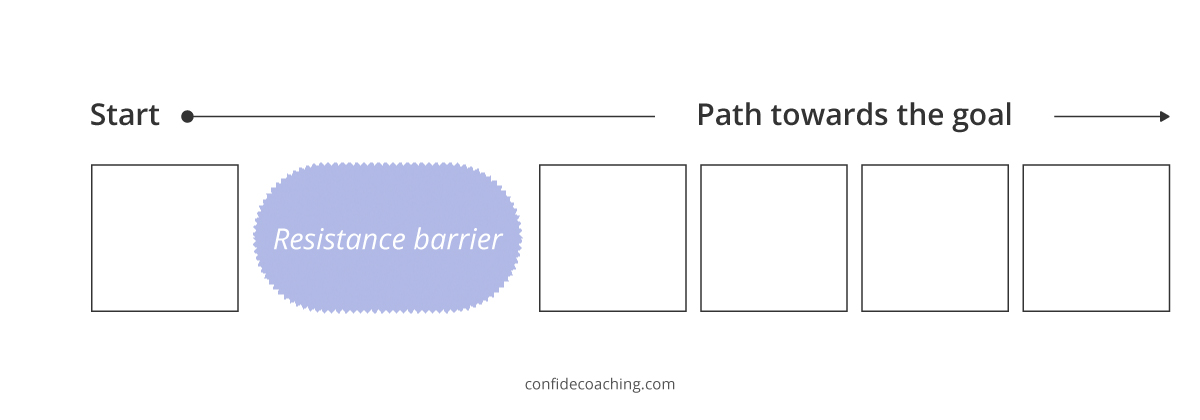
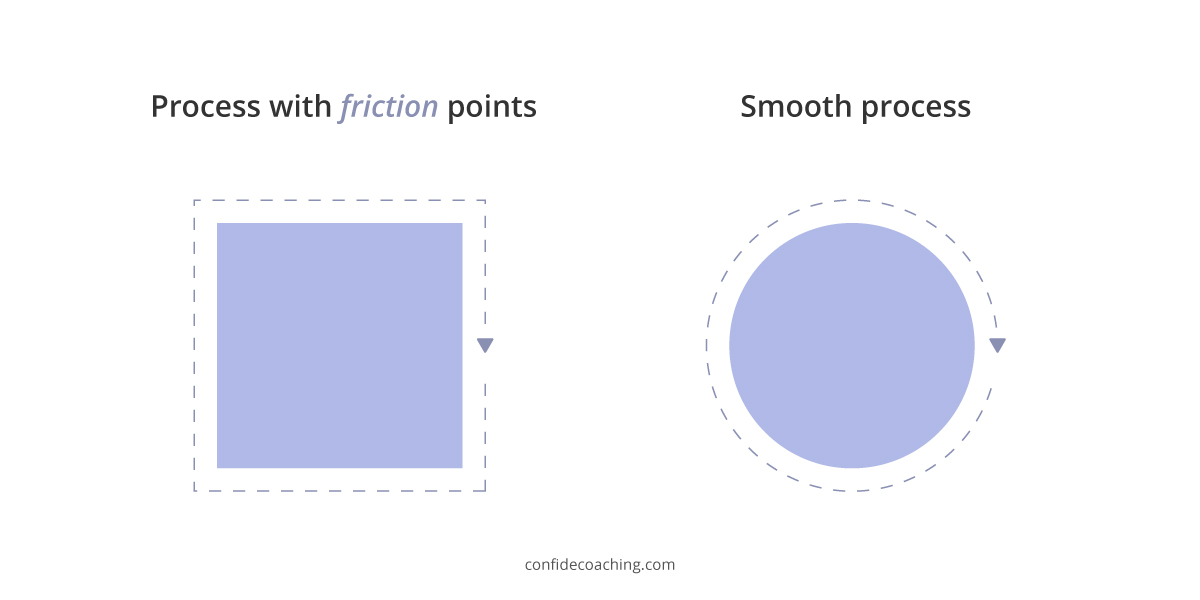
Most people respond to friction by trying to push harder: more effort, more willpower, more “discipline.” But willpower burns fast. The better path is to slow down, look closer, and identify what’s actually in the way. Because the moment friction disappears, change happens quickly — sometimes almost effortlessly.
You’ve probably felt that before: the gym that’s on your way home instead of across town; the prepped meal waiting in the fridge; the hard decision made the night before. When the setup is smooth, follow-through doesn’t feel like a fight.
From knowledge to action: how to design a system that reduces resistance
This brings me to another important point. Most of us don’t fail because we lack information. We fail because we never map our friction points.
We can know exactly how to eat, train, and rest — but if our schedule, environment, or beliefs work against those intentions, consistency will always slip. The same goes for career goals, relationships, or personal growth.
That’s why I tell clients: progress doesn’t come from pushing yourself harder. It comes from engineering less resistance.
Once you stop treating yourself like the problem and start treating the system as the problem, everything changes.
You can learn to see where resistance hides, what form it takes, and what it costs you — and then design around it.
When friction goes down, behavior flows naturally. Not because you’ve become a different person, but because you’ve removed what was blocking the person you want to become.
How to move past resistance and stay consistent
Once clients see Resistance for what it is, the next step is learning how to move through it.
That process isn’t about motivation or pushing harder; it’s about design, attention, and practice. The goal is to make progress frictionless enough that it becomes the natural path forward.
Here’s where we start:
1. Identify the real friction
When you feel stuck, pause before judging yourself. Ask: Where’s the drag?
Is it emotional — fear of failing again or feeling undeserving of success?
Is it cognitive — too many choices, no clear next step?
Is it environmental — too much noise, too little structure, not enough recovery time?
Naming the friction turns it from an invisible force into something you can actually work with. The moment you define it, you stop fighting yourself and start addressing the real problem.
2. Reduce the activation energy
You don’t need to overhaul your life. You just need to make the first step easy enough that your brain stops resisting it.
Lay out the clothes. Schedule the time block. Draft the email. Write the first sentence. These small, almost trivial actions lower the psychological barrier to action and disarm Resistance faster than any motivational speech. The smaller the entry point, the faster momentum builds. Once you’re in motion, effort feels lighter and progress feels inevitable.
3. Design for momentum, not perfection
When clients shift from trying to have perfect weeks to getting better at bouncing back after off-track moments, everything changes. Resistance loses one of its strongest disguises: perfectionism. Pressfield called perfectionism “Resistance’s favorite form of procrastination,” because it looks like high standards but keeps you stuck in planning and self-criticism. When you start seeing those moments as part of the process instead of proof of failure, you recover faster and move forward sooner. Consistency compounds not because you’re working harder, but because you’ve stopped punishing yourself for being human.
4. Reframe what effort means
Most people interpret Resistance as a sign they’re failing — that something’s wrong with them. But in truth, effort and frustration are signs you’re stretching into something meaningful.
Pressfield would say the presence of Resistance means the work matters. The struggle is proof of engagement. A signal that you’ve stopped avoiding growth and started doing the work that changes you. Instead of retreating when it feels hard, learn to see that tension as progress under construction.
5. Build recovery into the system
Sustained forward motion requires rest. Rest isn’t the opposite of progress; it’s what makes progress sustainable. Recovery — whether that’s sleep, quiet reflection, or time boundaries — prevents Resistance from rebuilding. Without intentional recovery, even meaningful work becomes friction-heavy again. The goal isn’t nonstop output; it’s a rhythm that lets you stay in the game for the long run.
From resistance to mastery: what happens when you keep showing up
Over time, something begins to shift. Clients stop seeing Resistance as an enemy to destroy and start recognizing it as part of the creative process of growth. It becomes a signal, not a verdict, the moment that tells you the work you’re doing actually matters. Pressfield wrote, “The more important a call or action is to our soul’s evolution, the more Resistance we will feel toward pursuing it.” Seen through that lens, Resistance isn’t proof of weakness; it’s a compass pointing directly toward what’s meaningful.
Mastery begins when you stop negotiating with Resistance and start working through it. You no longer wait for perfect conditions, for inspiration, or for clarity. You simply show up — over and over — until showing up becomes who you are. This is the essence of professionalism that Pressfield describes: the quiet discipline of doing the work because it’s the work, not because it feels easy or inspiring.
As clients internalize this mindset, their relationship with effort changes. They move from avoidance to engagement, from overthinking to flow. They start to experience progress not as a dramatic breakthrough but as steady, grounded forward motion. And ironically, that’s where freedom appears, not in escaping Resistance, but in mastering it.
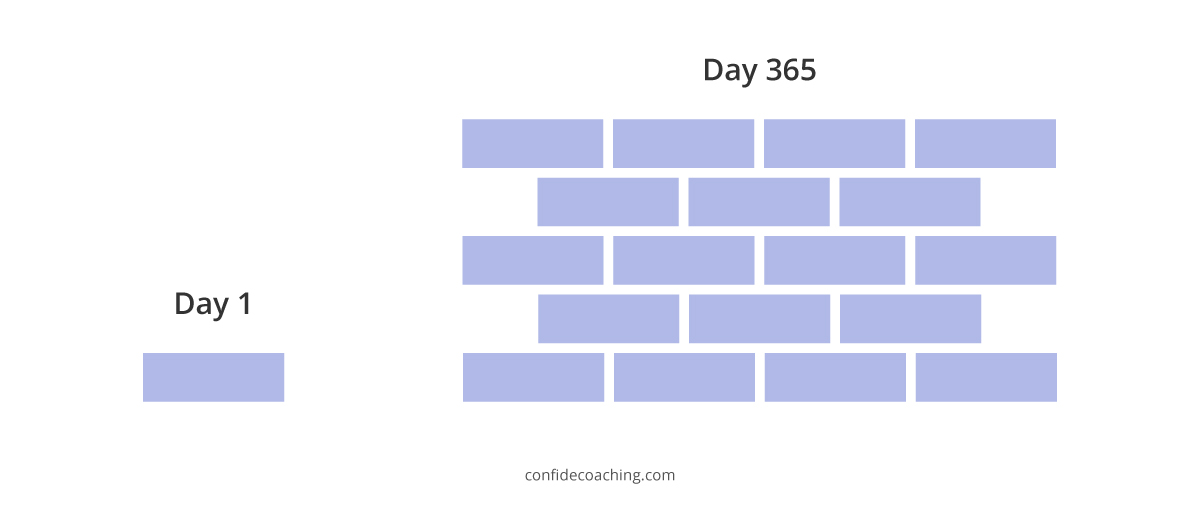
That’s the transformation this work aims for: helping you replace the constant inner battle with a sense of alignment. When Resistance shows up, you’ll know what it means and how to move through it. The war quiets. What used to feel like struggle begins to feel like momentum.
And from there, your growth stops depending on motivation. It starts running on rhythm, awareness, and design.
The first step forward: start overcoming resistance today
If you recognize yourself somewhere in this — caught between knowing and doing, between what you want and what keeps getting in the way — that’s Resistance at work. But it’s also a sign that you’re standing right at the edge of change. The question isn’t whether you have the discipline; it’s whether you’re ready to stop fighting yourself and start designing a path that actually works for you.
That’s the work we do in coaching. Together, we uncover where Resistance hides, simplify what feels complicated, and build systems that make progress feel natural again. If you’re ready to experience what that shift feels like, book a trial session. You don’t need to be ready for a complete overhaul, you just need to start. And once you do, the hardest part of the work is already behind you.
Further reading
For readers who want to explore these ideas in depth, Steven Pressfield’s The War of Art remains one of the most insightful books ever written on internal resistance and the psychology of meaningful work.

Paul Strobl, MBA, CPC
Owner of Confide Coaching, LLC
Paul is a Master Life Coach for GenX and GenY executives and business owners. Originally from Houston, Texas, he has been location independent for most of his adult life. He currently resides in the Rhodope Mountains of Bulgaria near the Greek border with his brilliant wife, 15-year-old stepson (officially adopted in 2021!) and a Posavac Hound rescue.
Paul is also a Certified BOSI Partner, Executive Coach, and Entrepreneurial DNA practitioner who has delivered BOSI-based workshops for MBA programs, accelerators, and leadership teams worldwide.
Reference
Pressfield, Steven. The War of Art: Break Through the Blocks and Win Your Inner Creative Battles. Black Irish Entertainment LLC, 2012