

The Quiet Moment Most Years Drift
January 1st is full of promise.
January 31st is full of truth.
By the first week of the year, most people can already feel the shift. The inbox is heavy again. Meetings are back on the calendar. The parts of life that never paused for your resolutions have quietly reclaimed their space.
This is usually where the year starts to drift.
Not in dramatic ways. Not with a clear failure. Just a subtle loss of traction. You’re still working. Still trying. But the sense of forward pull begins to weaken.
And it rarely happens because people lack ambition or clarity. Most of the people I work with know exactly what they want to change. They’ve thought about it carefully. They’ve reflected. They’ve set intentions.
The problem is simpler than that.
Clarity without structure doesn’t survive friction.
Why wanting it isn’t enough
At Confide Coaching, I see this pattern every year with entrepreneurs, executives, and high-performing professionals. Intelligent, capable people assume that wanting something badly enough will carry them through the year. That if the vision is clear, the follow-through will take care of itself.
It won’t.
What carries a year is what remains once motivation stops doing the work for you.
That’s where reflection comes in and where it often falls short.
Recently, Modern Wisdom host Chris Williamson shared an annual review template built around thoughtful questions: what worked, what didn’t, what mattered, what didn’t, and what the future version of you might regret.
It’s a solid exercise. And for many people, it’s exactly where the process ends.
They gain insight, feel momentarily clear, and move on.
But reflection alone doesn’t change outcomes.
What changes outcomes is what you do with what you see.
The real value of an annual review isn’t awareness. It’s noticing the invisible forces that shaped your behavior once effort was no longer enough to compensate.
How blind spots are created
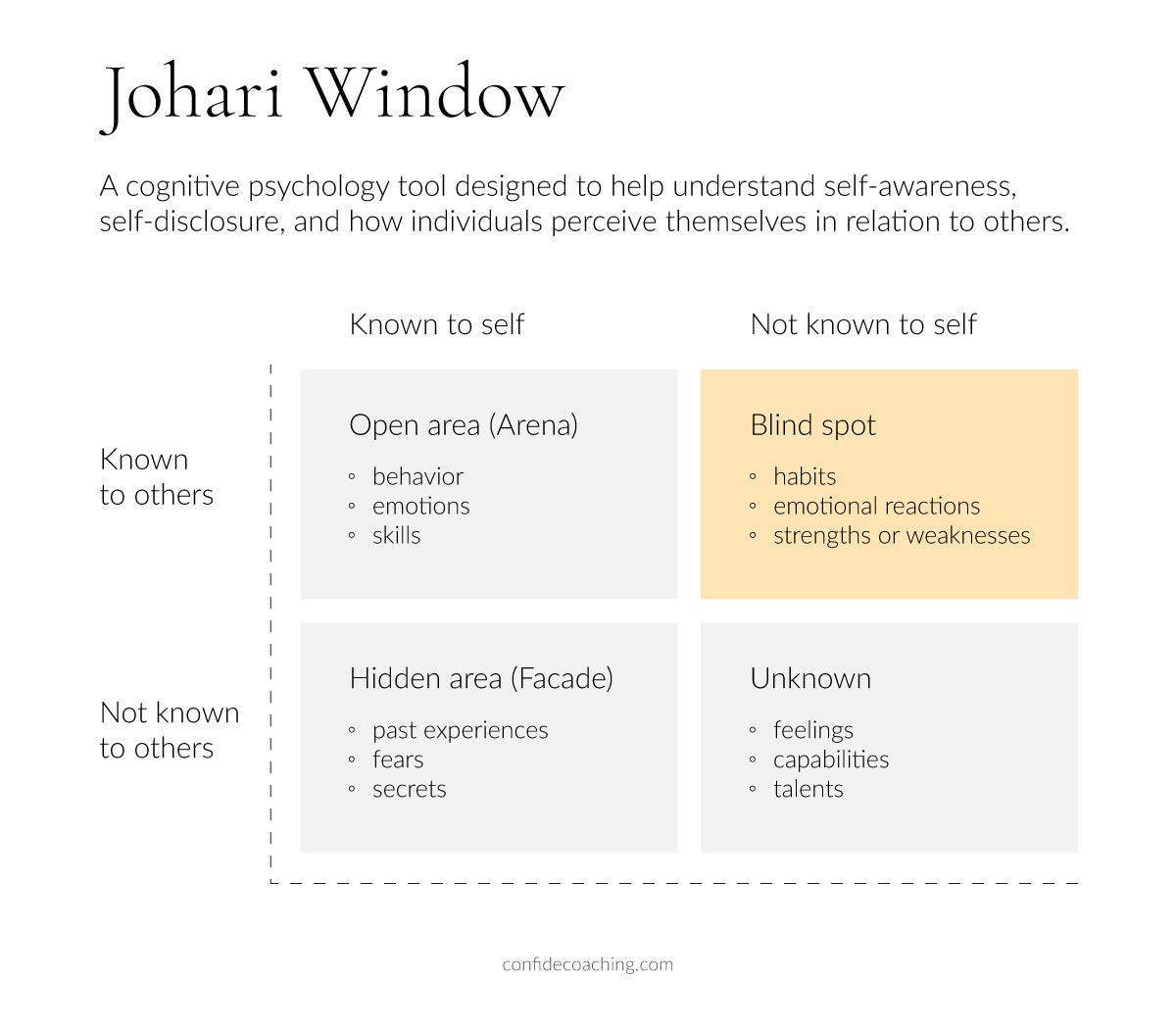
That’s where blind spots enter the picture.
Blind spots aren’t a result of poor self-awareness. They’re usually created by a temporary surplus of energy.
Early in the year, motivation covers a lot of ground. It smooths over inefficiencies. It allows you to tolerate friction you wouldn’t accept later. When energy is high, you can override weak structure with effort and convince yourself that things are working.
And for a while, they are.
But only because you’re holding them together.
As the weeks pass, life returns to its usual density. Decisions stack up. Attention fragments. Energy becomes finite again. And that’s when the real system reveals itself.
Anything that isn’t structurally supported starts to wobble. Goals don’t collapse; they drift. Progress slows in ways that are hard to explain. You’re still working, but the returns feel thinner than they should.
This is the point where most people misdiagnose the problem. They assume they need more discipline, sharper focus, better habits. In reality, they’re discovering where effort has been quietly doing the job structure should have been doing all along.
Blind spots are simply the places where that substitution has been happening.
Once you see that, the way most years derail stops feeling random. The same issues resurface not because people fail, but because the underlying design was never built to carry the load once motivation stepped back.
What follows aren’t tips. They’re pressure points: predictable places where success depends on willpower instead of alignment.
And those are exactly the places that determine whether this year compounds… or quietly slips away.
Where effort quietly replaces design
What tends to fail first isn’t effort. It’s design.
Most people assume discipline is the missing ingredient, but discipline is only required when the system is weak. When things are well designed, the right actions don’t require daily negotiation. They happen by default. When they aren’t, willpower gets drafted to fill the gap.
That works for a while. Then it gets expensive.
If you look back at last year, the areas that held steady weren’t the ones you cared about most. They were the ones that were structurally supported. Time was protected. Decisions were already made. Friction had been removed before it had a chance to drain you.
Those weren’t motivational wins. They were design wins.
Reflection questions to sit with:
- What habit or system accounted for most of my success last year?
- When things went well, what made them easy to sustain?
- What are the most valuable ways I spend my time, and how intentionally are they protected?
Why some goals stall without ever failing
Now look at what didn’t move.
In most cases, it wasn’t a lack of desire. It was too many open loops. Goals that required constant reconsideration. Priorities that shifted depending on the week. Decisions that were never fully closed, just postponed again and again.
Unfinished goals are particularly deceptive. They don’t fail loudly. They linger. They sit in the background, consuming attention and creating a low-grade sense of obligation. Many people carry goals forward year after year not because they still matter, but because letting go feels like admitting something about themselves they’re not ready to confront.
Progress requires clean endings. Either a goal gets simplified until follow-through becomes likely, or it gets retired deliberately. Anything else leaves you negotiating with the past while trying to move forward.
Reflection questions to consider:
- What did I expect to complete last year but didn’t?
- Is this still an important goal, or has my priority shifted?
- If it still matters, what would make future follow-through more likely?
Why habits break under pressure
At this point, most people try to optimize behavior. Better habits. Tighter routines. More discipline.
But habits don’t hold when they’re built on an identity that no longer fits the reality of your life.
The real question isn’t what you do on your best days. It’s who you are on ordinary ones. Who shows up when energy is low, plans fall apart, and conditions aren’t ideal. That version of you determines consistency far more than any routine ever will.
This is where structure and identity meet.
When your systems reflect who you actually are — not who you imagine yourself to be in an inspired moment — follow-through gets easier. Not because you care less, but because you’re no longer fighting your own design.
Reflection questions to explore:
- What are the things I do that make my days go well — and which ones screw it up?
- What would an ideal normal day look like if it were realistic, not aspirational?
- Who do I need to become for the next chapter of my life to turn out the way I’d want to write it?
What blind spots really are
Seen this way, blind spots aren’t flaws. They’re feedback.
They mark the exact places where willpower has been compensating for misalignment; where effort has been doing work that structure should have handled quietly in the background.
Fix those pressure points, and something subtle happens. Effort starts to feel lighter. Progress becomes steadier. The year begins to carry itself.
Not perfectly.
But reliably.
And reliability, over time, is what actually compounds.
A final reflection to anchor the year:
- What would need to happen by the end of this year for me to look back and consider it a success?
- Knowing what I know now, what advice would I give myself twelve months ago — and am I willing to listen to it this time?
A framework that holds when motivation doesn’t
If you’re reading this early in the year, this is the moment to shift from insight to design.
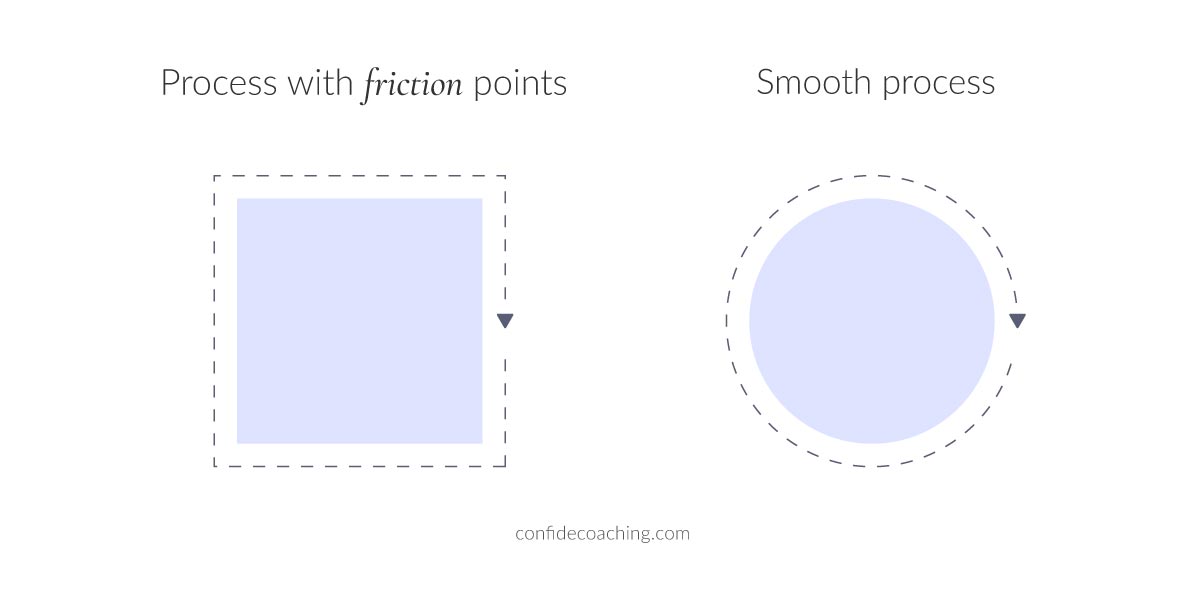
Not a full reset. Not a reinvention. Just a few deliberate moves that reduce friction instead of adding pressure.
- Protect one system that worked last year, and stop compromising it
- Retire one goal that no longer aligns with who you are now
- Eliminate one activity that creates busyness without progress
- Commit to one identity shift that makes follow-through easier under stress
This isn’t about doing more. It’s about removing internal negotiations so progress costs less energy.
Four deliberate changes will always outperform ten well-intentioned ones.
The Confide Coaching perspective
At Confide Coaching, we don’t work on motivation.
We work on alignment between what you believe, what you’re aiming for, how your life is structured, and who you’re becoming in the process.
When those elements are aligned, consistency becomes natural. When they aren’t, even the most driven people end up burning energy compensating for invisible friction.
If this year matters to you — not just in ambition, but in execution — the work isn’t about trying harder.
It’s about designing a life where the right actions require less effort than the wrong ones.
That’s how years stop slipping away.
Credit & further reflection
The reflection framework referenced in this article is adapted from the annual review created by Chris Williamson, host of the Modern Wisdom podcast.
If you’d like to work through the original review questions in their raw form, you can download Chris’s full annual review template here: https://chriswillx.com/review/
It’s an excellent tool for insight.
This article is about what to do after the insight arrives.
Ready to go deeper?
If you’re clear on what needs to change but unsure how to structure it, this is exactly the work we do in coaching.
One focused conversation can surface blind spots you’ve been compensating for and help you design systems that actually hold when motivation doesn’t.
You don’t need another goal.
You need a framework that supports the one you already care about.
Book your free discovery session here.
The year doesn’t change all at once. It changes the moment you stop compensating for what isn’t working.
Paul Strobl, MBA, CPC
Owner of Confide Coaching, LLC
Paul is a Master Life Coach for GenX and GenY executives and business owners. Originally from Houston, Texas, he has been location independent for most of his adult life. He currently resides in the Rhodope Mountains of Bulgaria near the Greek border with his brilliant wife, 15-year-old stepson (officially adopted in 2021!) and a Posavac Hound rescue.
Paul is also a Certified BOSI Partner, Executive Coach, and Entrepreneurial DNA practitioner who has delivered BOSI-based workshops for MBA programs, accelerators, and leadership teams worldwide.